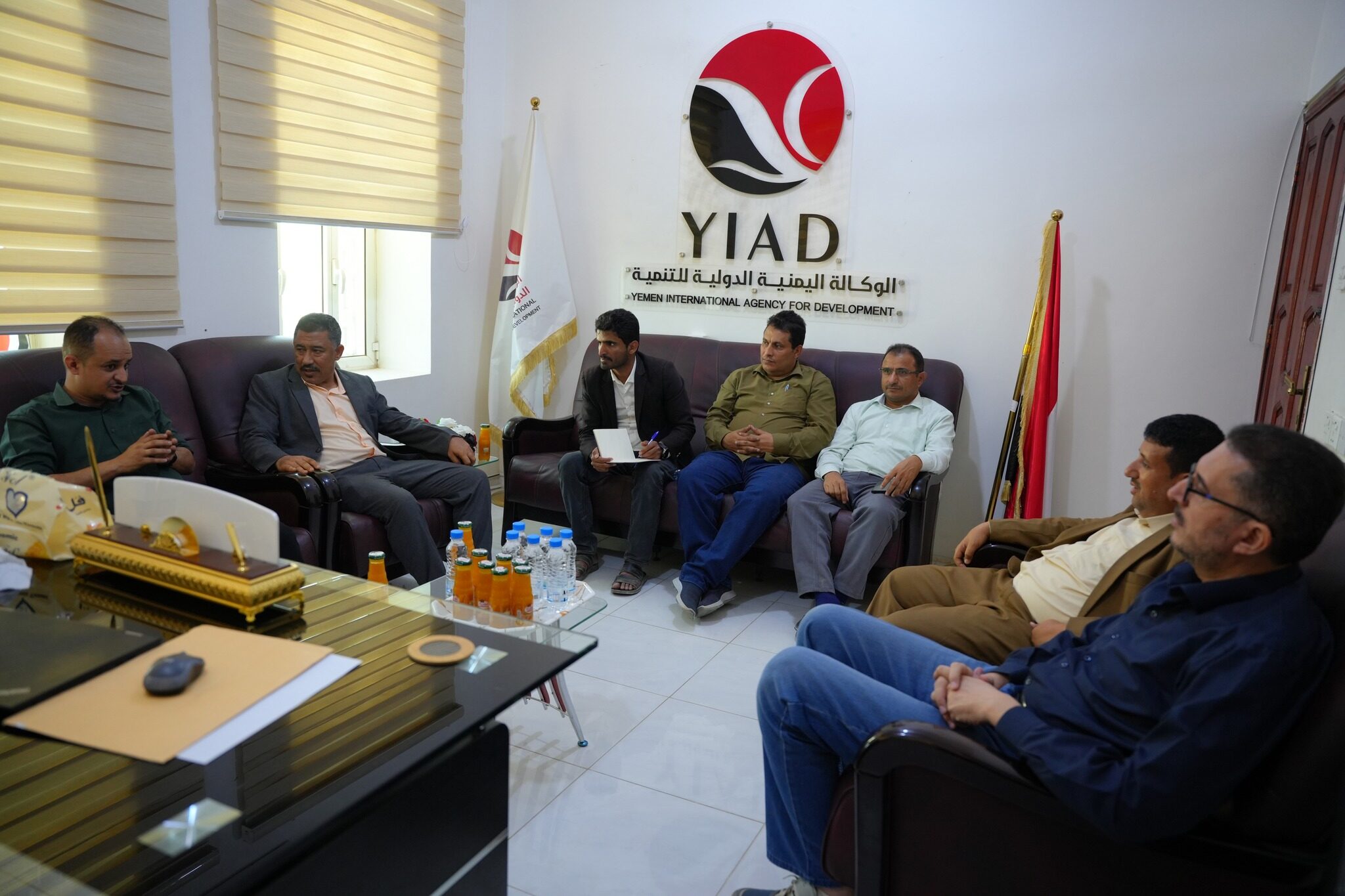
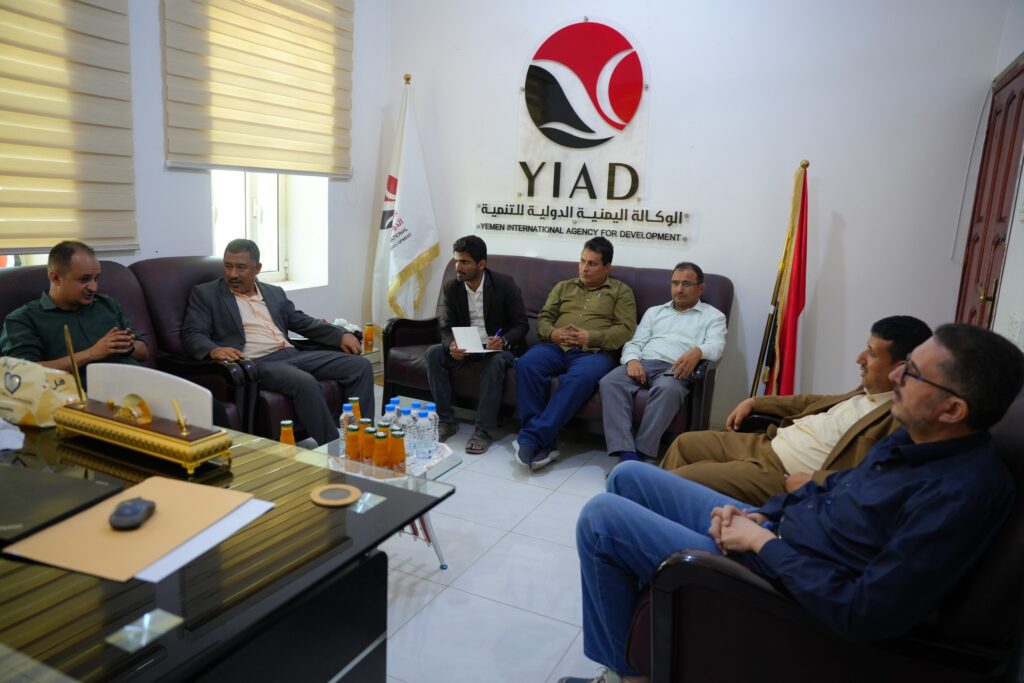
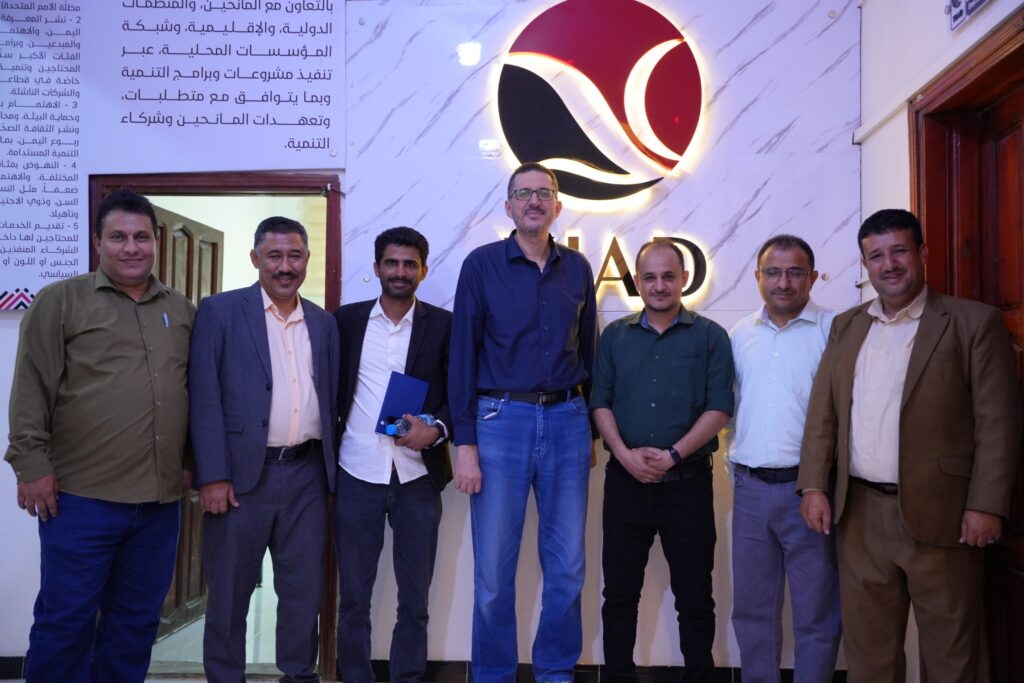
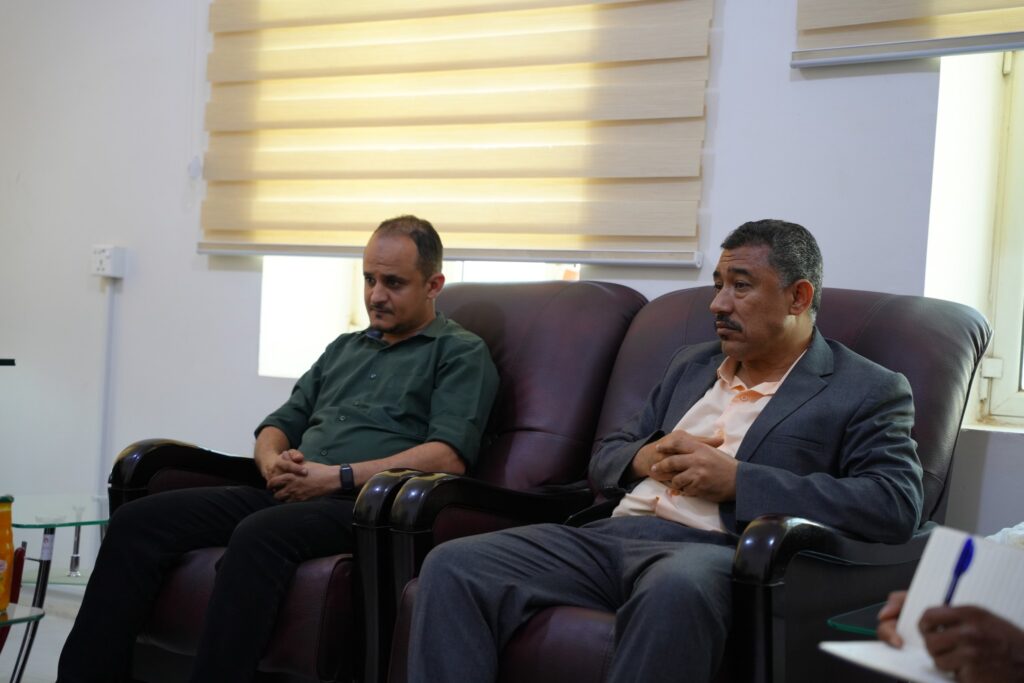
As part of its ongoing efforts to strengthen humanitarian cooperation and expand effective partnerships, the Yemen International Agency for Development received a delegation from ACTED. The meeting reflected shared visions aimed at advancing humanitarian and development work in Yemen, particularly in Marib Governorate, which is witnessing a growing need for sustainable humanitarian interventions.
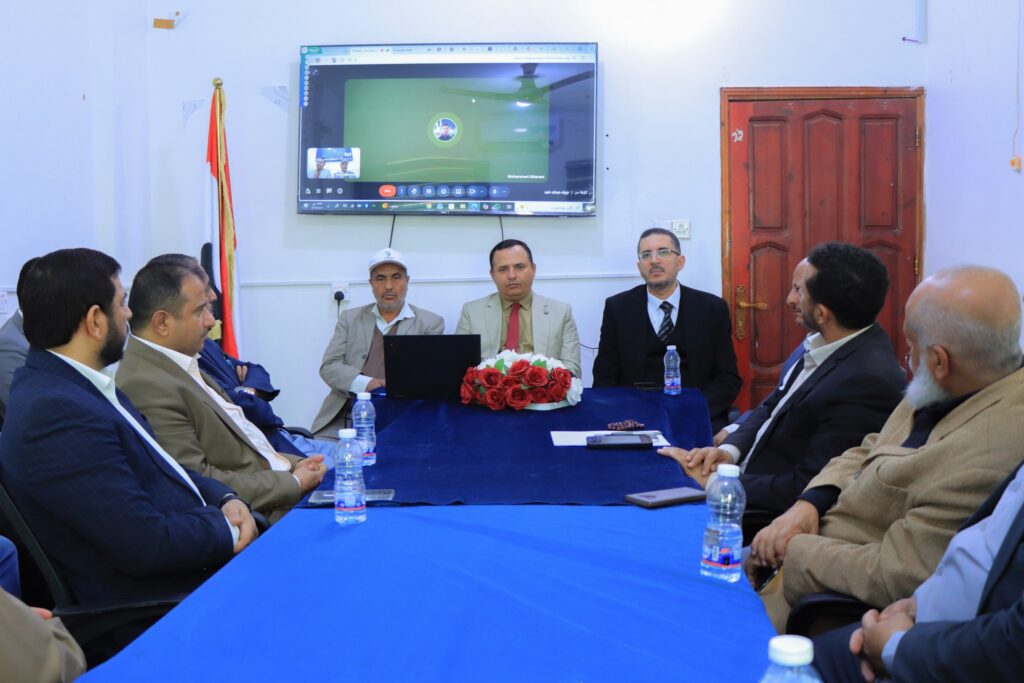
The ACTED delegation included Mr. Jihad Al-Hadrami, Director of the organization, and Mr. Saeed Nasser, Head of Relations and Coordination in Marib. They were received by the Executive Director of the Agency, Dr. Abdulsalam Al-Salami, along with several staff members, in an atmosphere characterized by mutual understanding and a shared commitment to building strategic partnerships that serve local communities.
During the meeting, the Agency presented its key humanitarian and development programs, covering sectors such as education, health, food security, and economic empowerment. The discussion also highlighted recent achievements and the challenges facing humanitarian work under current conditions.
Both parties discussed ways to enhance joint cooperation by developing coordination mechanisms and exchanging expertise, contributing to the implementation of high-quality projects with sustainable impact that meet the needs of the most vulnerable groups and align with future priorities.
The two sides emphasized the importance of building qualitative partnerships based on integration and unified efforts to improve the efficiency and effectiveness of humanitarian interventions and achieve more comprehensive and sustainable responses amid growing humanitarian challenges.
This visit reaffirms the Yemen International Agency for Development’s commitment to building strategic relationships with various institutions and expanding cooperation to achieve shared goals that serve communities and support sustainable development.
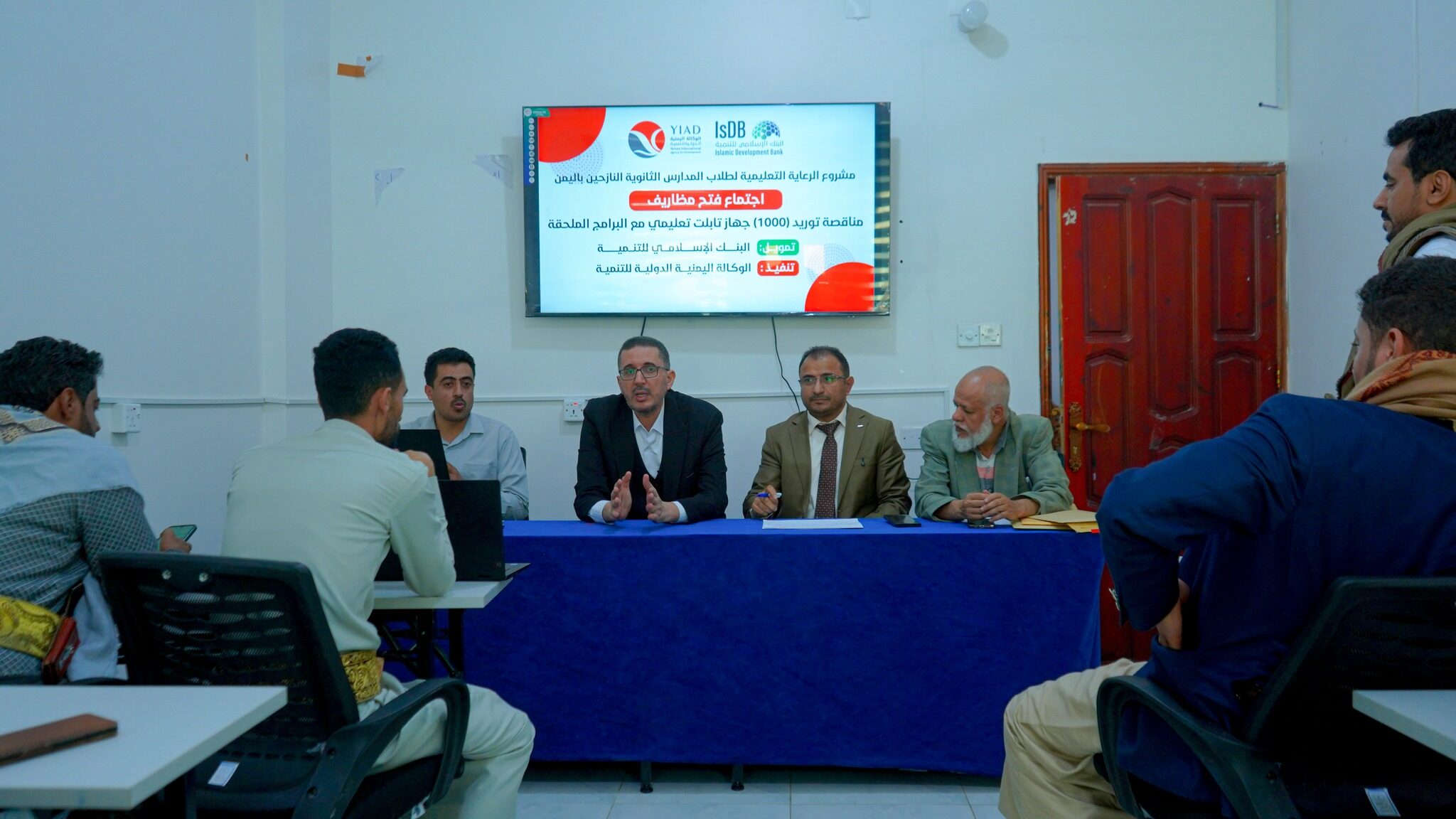
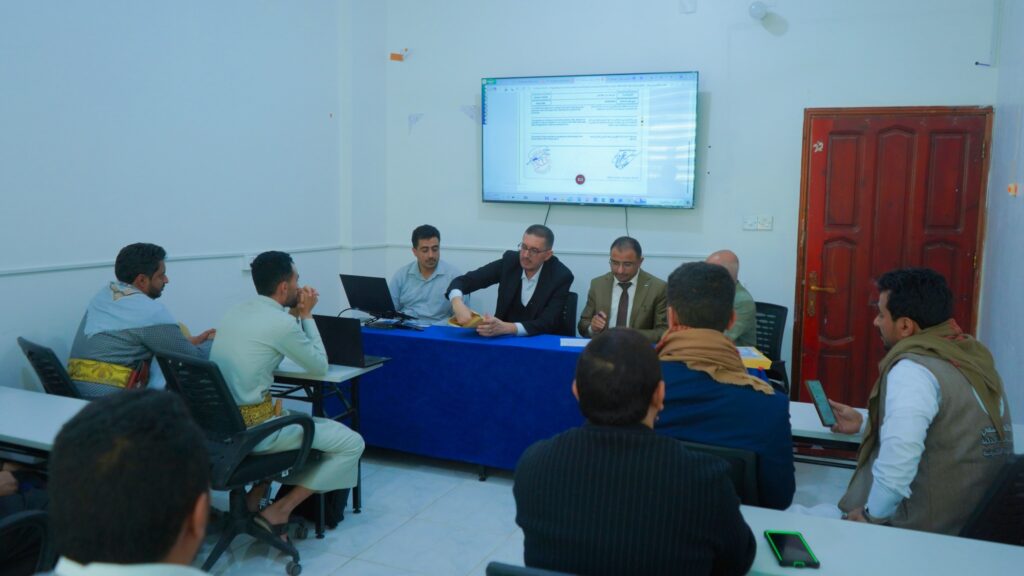
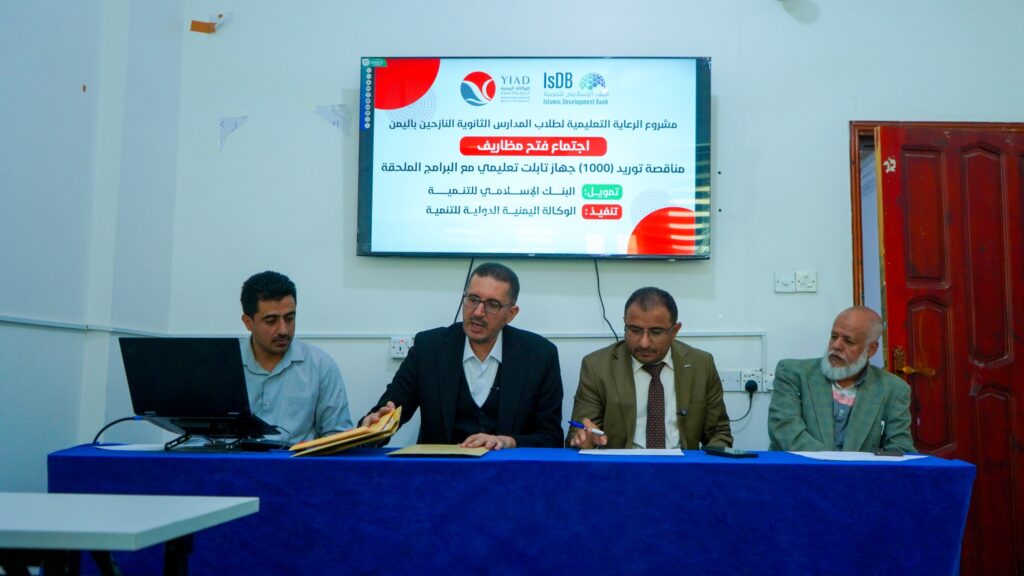
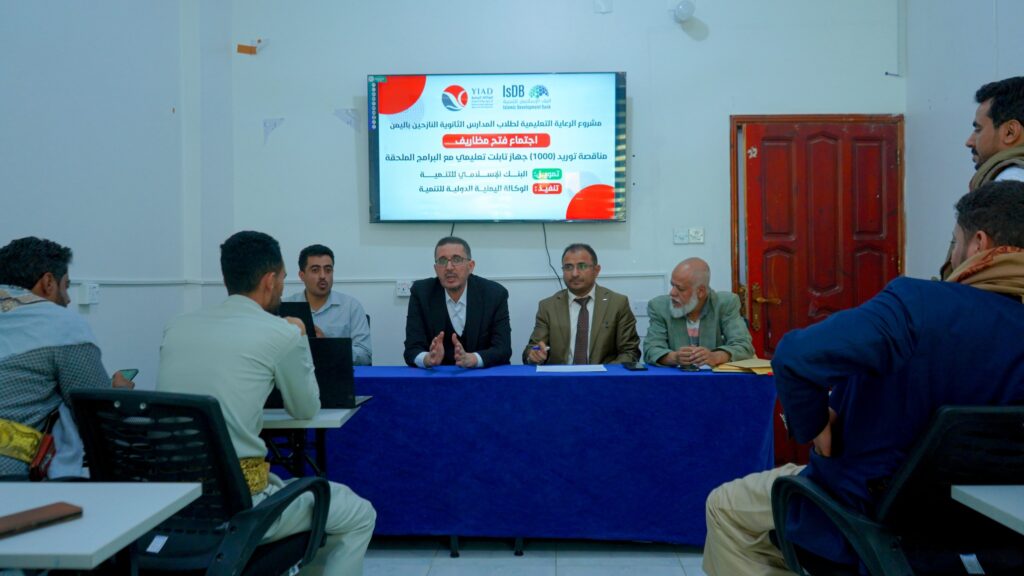
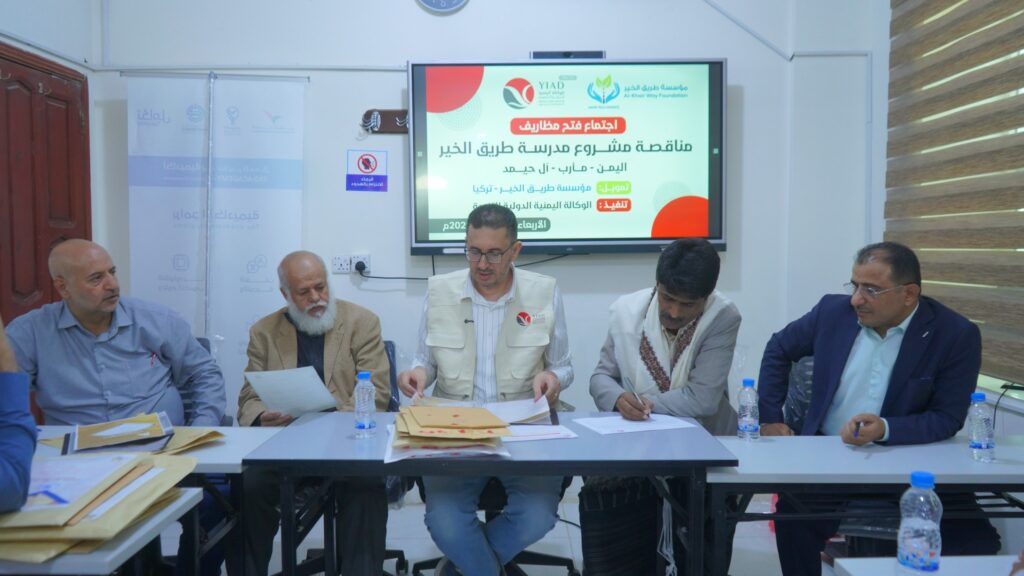
The Yemen International Agency for Development held an official meeting to open bids for the Educational Support Project for displaced students in Yemen, which aims to support secondary school students affected by displacement. The meeting was attended by representatives of the Agency, members of the evaluation committee, and delegates of the companies that submitted bids.
The tender includes the procurement of one thousand (1,000) educational tablet devices, equipped with accompanying educational software, in addition to the design and development of an integrated electronic system to manage the project. This initiative aligns with the requirements of digital education and contributes to improving the efficiency of monitoring and implementation processes.
This project comes as part of the Agency’s efforts to strengthen the educational process for displaced secondary school students by providing modern digital learning tools. These tools aim to facilitate access to educational content and academic services, as well as to organize educational follow-up between students, teachers, and project management.
During the meeting, the technical and financial proposals submitted by the participating companies were reviewed in accordance with approved criteria, ensuring transparency, integrity, and the achievement of the best possible value for the project. This step precedes the completion of evaluation and award procedures in line with applicable legal and administrative frameworks.
The Yemen International Agency for Development emphasized that this project responds to the growing educational needs of displaced students, particularly in light of the challenges facing the education sector in Yemen. The Agency reaffirmed its commitment to adopting innovative and sustainable solutions that contribute to improving the quality of education and supporting the most vulnerable groups.
The Agency added that the Educational Support Project represents an important step toward enhancing digital education and providing a more flexible and effective learning environment for displaced students. This will help students continue their education and mitigate the impact of the exceptional circumstances they face.
This initiative also reaffirms the Agency’s commitment to building strategic relationships with various institutions and expanding cooperation frameworks to achieve shared goals that serve and promote community development.
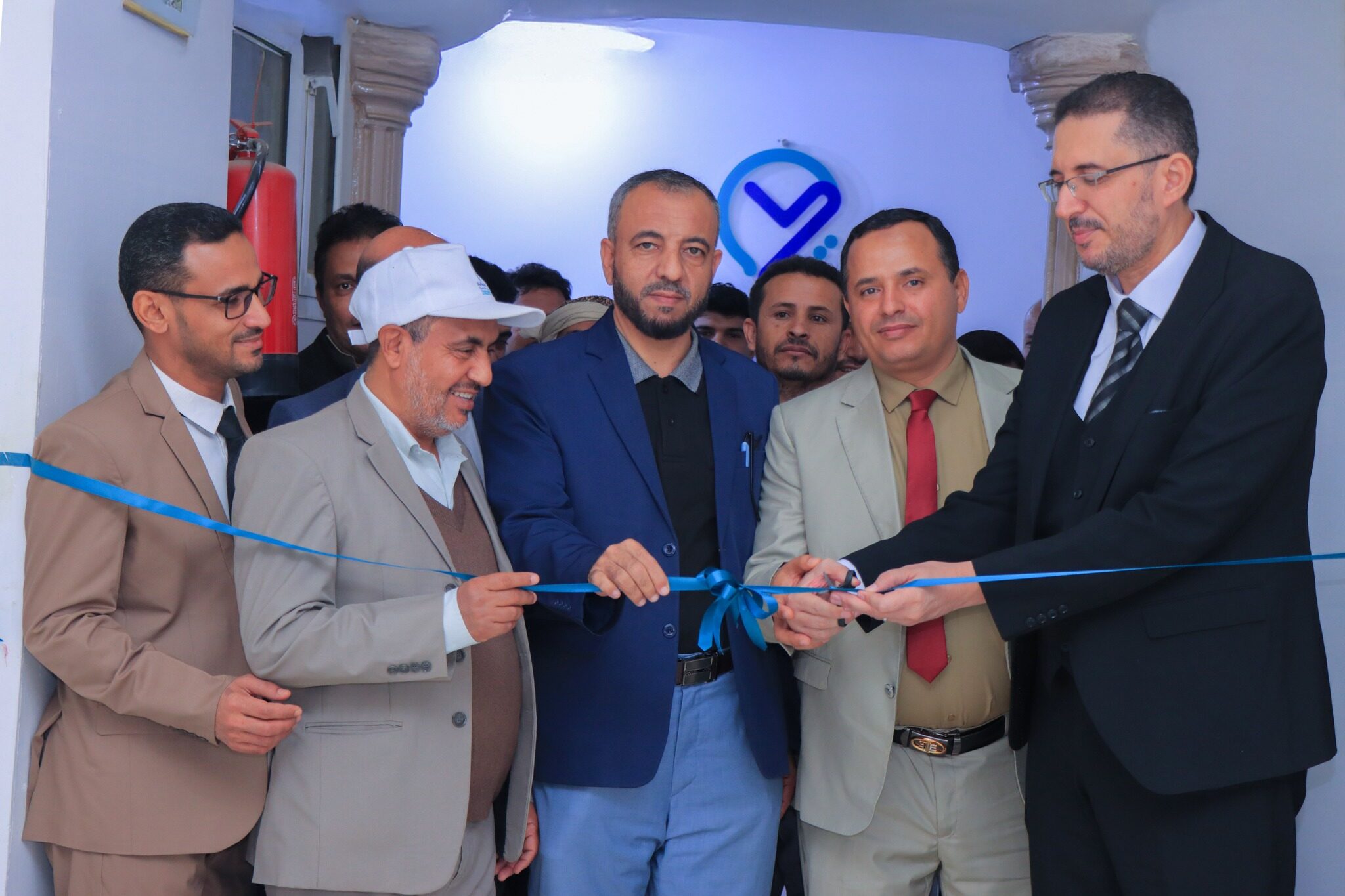
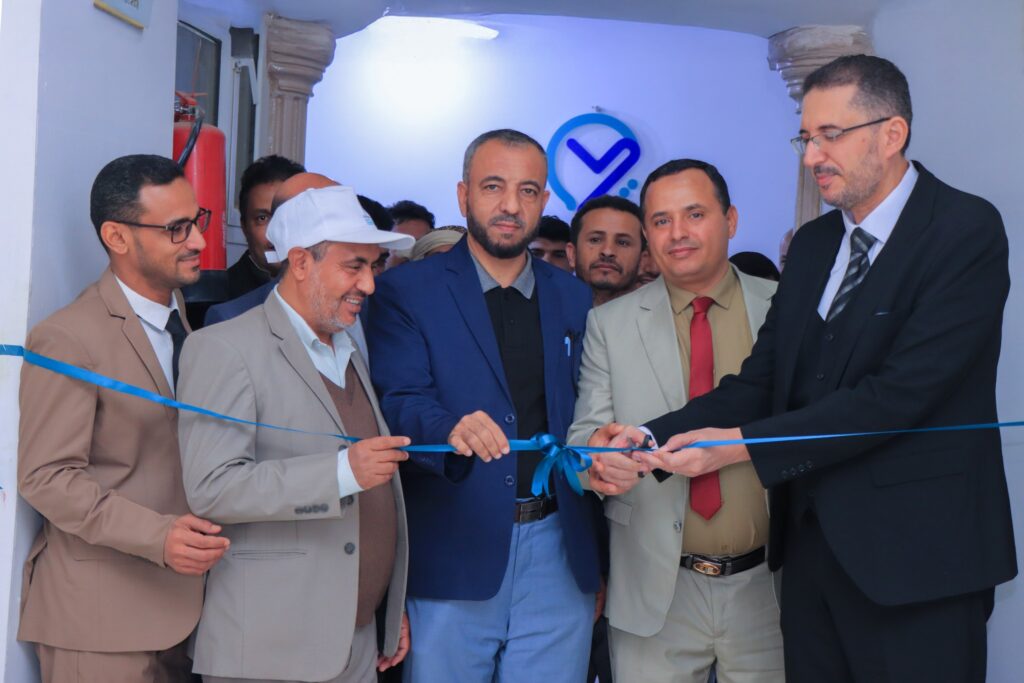
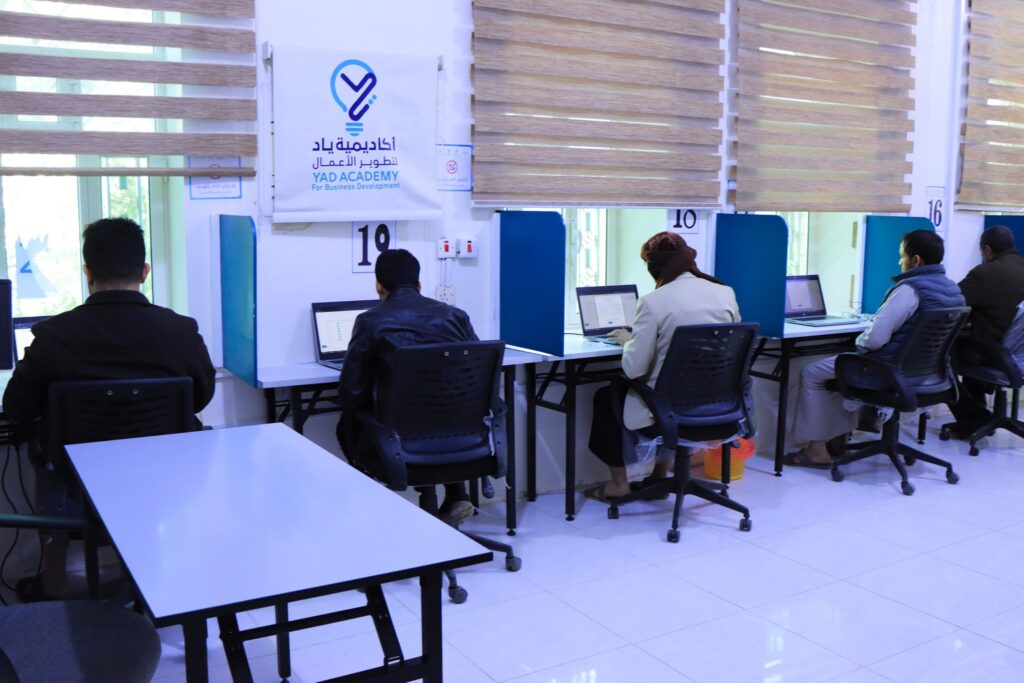
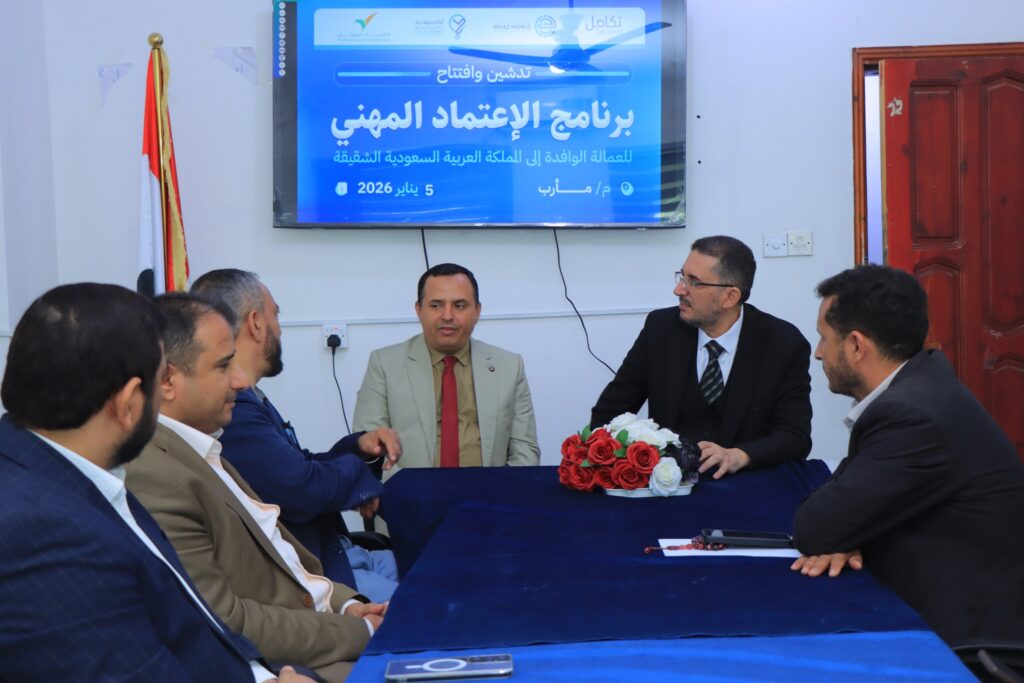
The Professional Accreditation Center for workers seeking employment in the Kingdom of Saudi Arabia was officially launched in Marib Governorate. The center is implemented by the YAD Academy for Business Development, affiliated with the Yemen International Agency for Development, as part of efforts to regulate the labor market and enhance professional competencies in accordance with the standards approved by the Saudi Ministry of Human Resources and Social Development, in cooperation with Alem Al-Injaz Training and Education Company.
The center aims to conduct professional examinations and assessments for skilled workers seeking employment in Saudi Arabia, ensuring that applicants possess the required professional competencies. YAD Academy is recognized as an authorized and accredited center to conduct professional tests and evaluations under this program.
The inauguration ceremony was attended by several official and academic leaders, including Jamal Al-Jaafari, Director General of Training and Rehabilitation in Marib Governorate; Abdulhalim Al-Hijri, Director General of Technical Education at Sana’a Municipality; and Abbas Abdulmagni, Director General of Social Affairs at Sana’a Municipality.
The event was also attended by Dr. Abdulsalam Al-Sallami, Director of the Yemen International Agency for Development; Dr. Mohammed Ali Omar, Director of YAD Academy for Business Development; and Mohammed Ali Al-Kenani, representative of Alem Al-Injaz Training and Education Company.
Participants emphasized the importance of the program in improving the quality of migrant labor, enhancing access to safe and legal employment opportunities, protecting workers’ rights, and raising professional efficiency in alignment with the requirements of the Saudi labor market.
This initiative comes as part of a series of development programs implemented by the Yemen International Agency for Development through its educational and training arms, supporting human development pathways and strengthening professional capacities in Yemen.
This initiative also reaffirms the Yemen International Agency for Development’s commitment to building strategic partnerships with various institutions and expanding cooperation to achieve shared goals that serve community development.
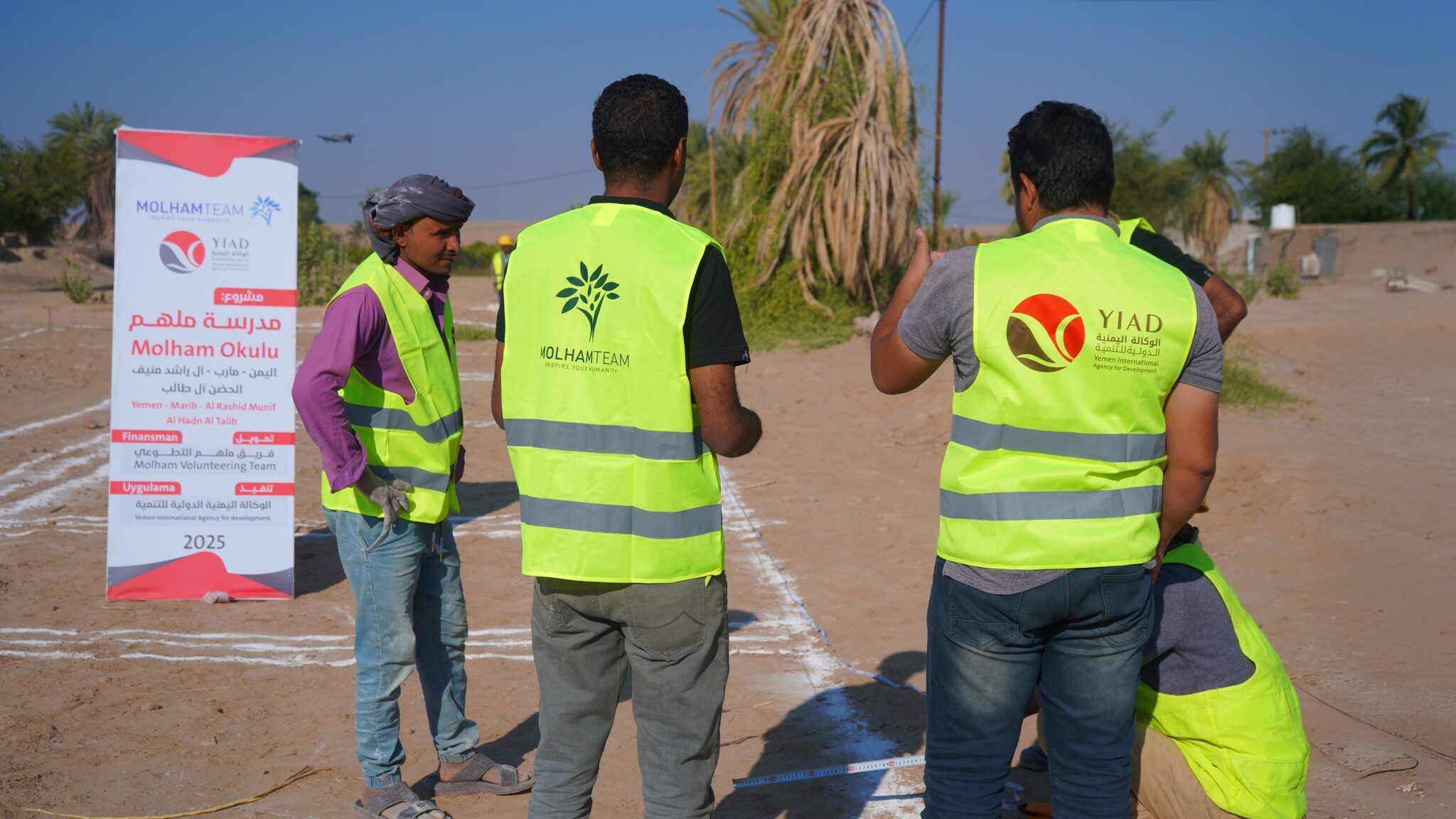
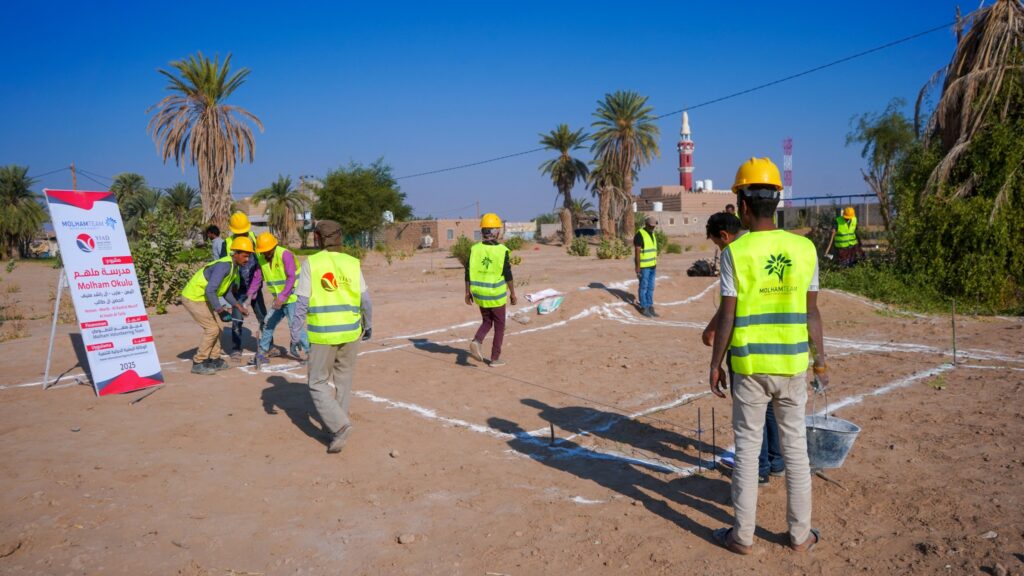
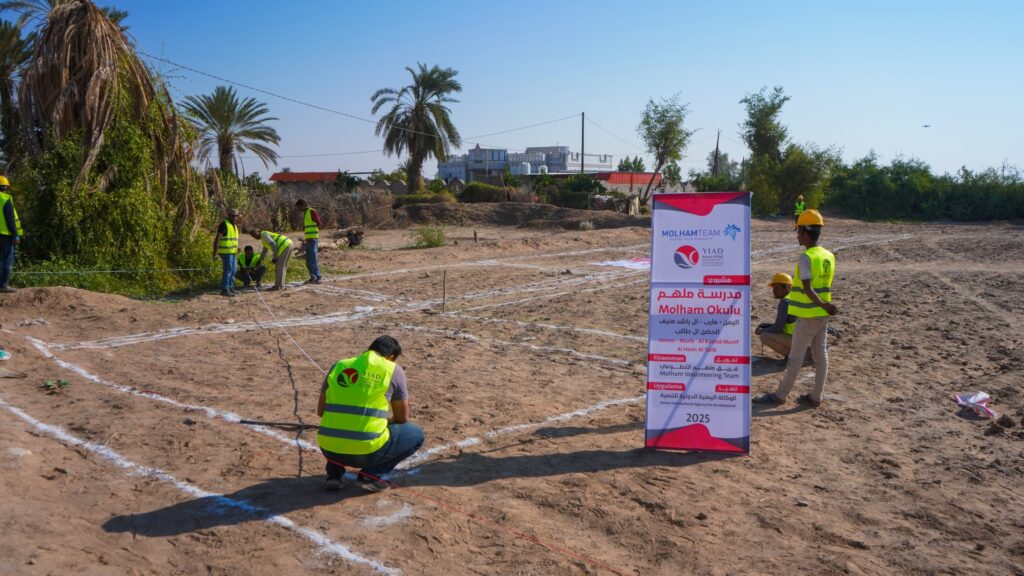
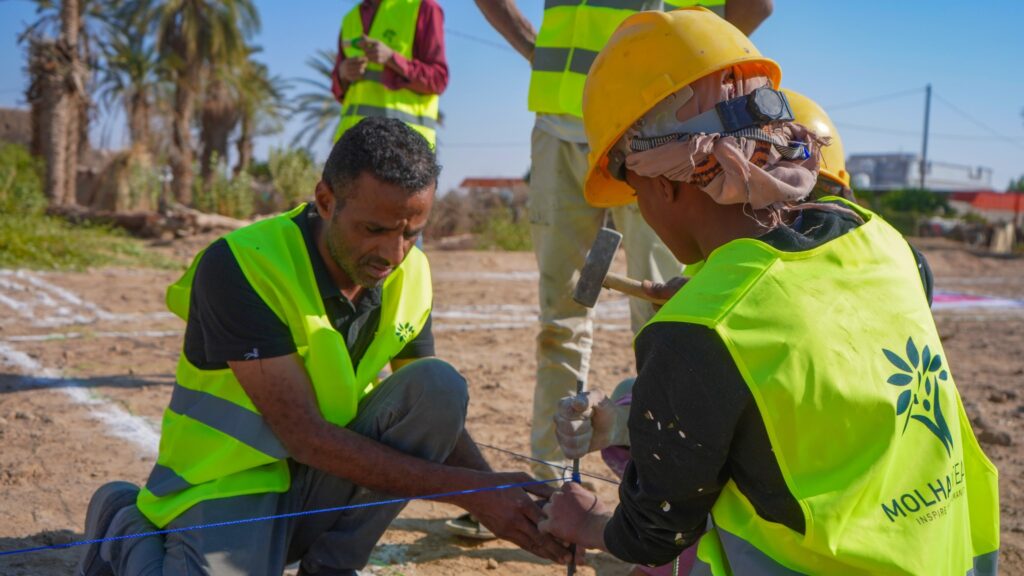
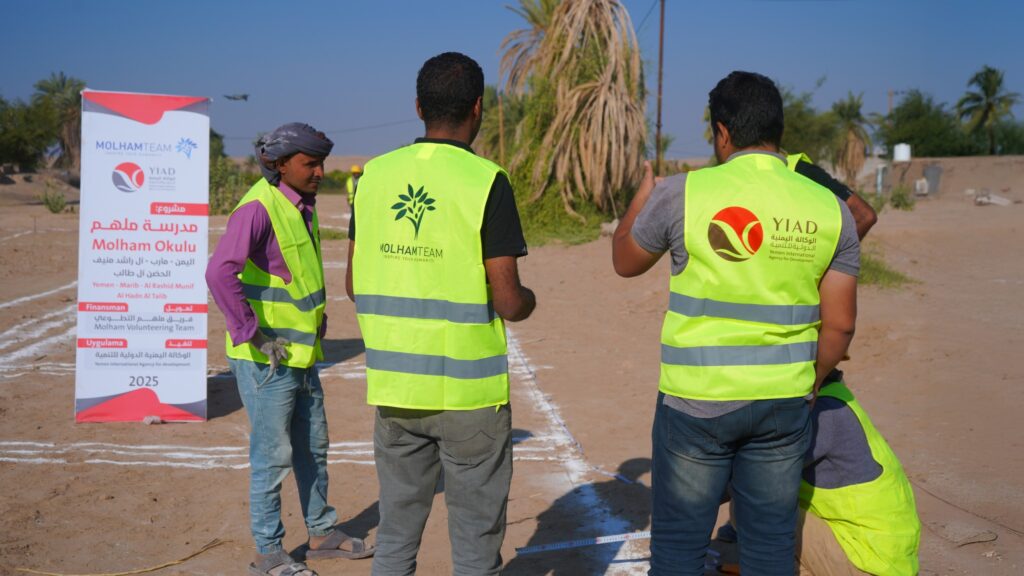
The Yemen International Agency for Development has launched the first phase of the Mulhim School Project, marked by the commencement of preparatory works and technical planning, signaling the start of implementing one of the educational projects aimed at strengthening educational infrastructure and expanding access to education.
The project comes in response to the growing need for educational facilities and seeks to provide a modern and safe learning environment capable of accommodating increasing numbers of students. It also aims to enhance the quality of the educational process and support educational stability in the area.
The Mulhim School Project is funded by the Mulhim Team and implemented by the Yemen International Agency for Development, within a development partnership that seeks to invest in the education sector as a key pillar of sustainable development and to build a better future for upcoming generations.
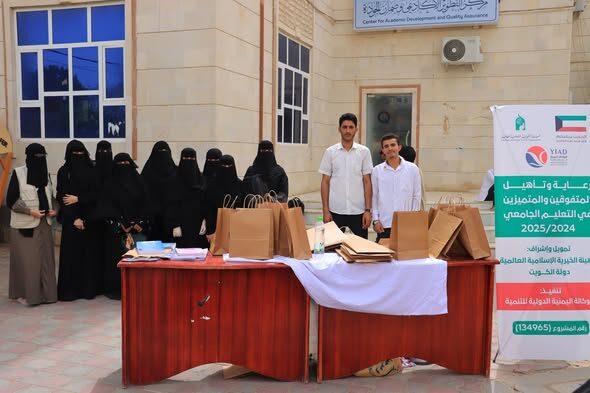
Yemen International Agency for Development implemented a humanitarian and educational initiative as part of the Outstanding Students Care Project, which involved distributing academic textbooks to a number of needy university students in Marib Governorate. This initiative reflects the strong link between academic excellence and social responsibility, as well as support for the educational process.
The initiative aimed to support university students who are unable to afford their required textbooks, thereby reducing their financial burden, supporting their continuation in higher education, and enhancing their opportunities for academic success and excellence.
The initiative was carried out with the participation of students from the Outstanding Students Care Project, who expressed through this effort their awareness of the importance of transforming academic excellence into tangible impact that serves the community. It also embodied the values of solidarity and social responsibility, affirming that true excellence is only complete when it contributes to supporting others.
Yemen International Agency for Development confirmed that this initiative aligns with its vision that education is one of the most important tools for development, and that supporting students—particularly at the university level—represents a real investment in human development and in empowering youth to play an effective future role in serving their communities.
The Agency also noted that the Outstanding Students Care Project is not limited to academic support alone, but also seeks to instill values of giving, volunteerism, and social responsibility among students, contributing to the preparation of a conscious generation that combines knowledge with humanitarian initiative.
Yemen International Agency for Development continues to implement its educational and community programs across several governorates, within plans aimed at enhancing access to education and supporting students in need.
This initiative reaffirms Yemen International Agency for Development’s commitment to building strategic relationships with various institutions and expanding cooperation to achieve shared goals that serve society and contribute to its development.
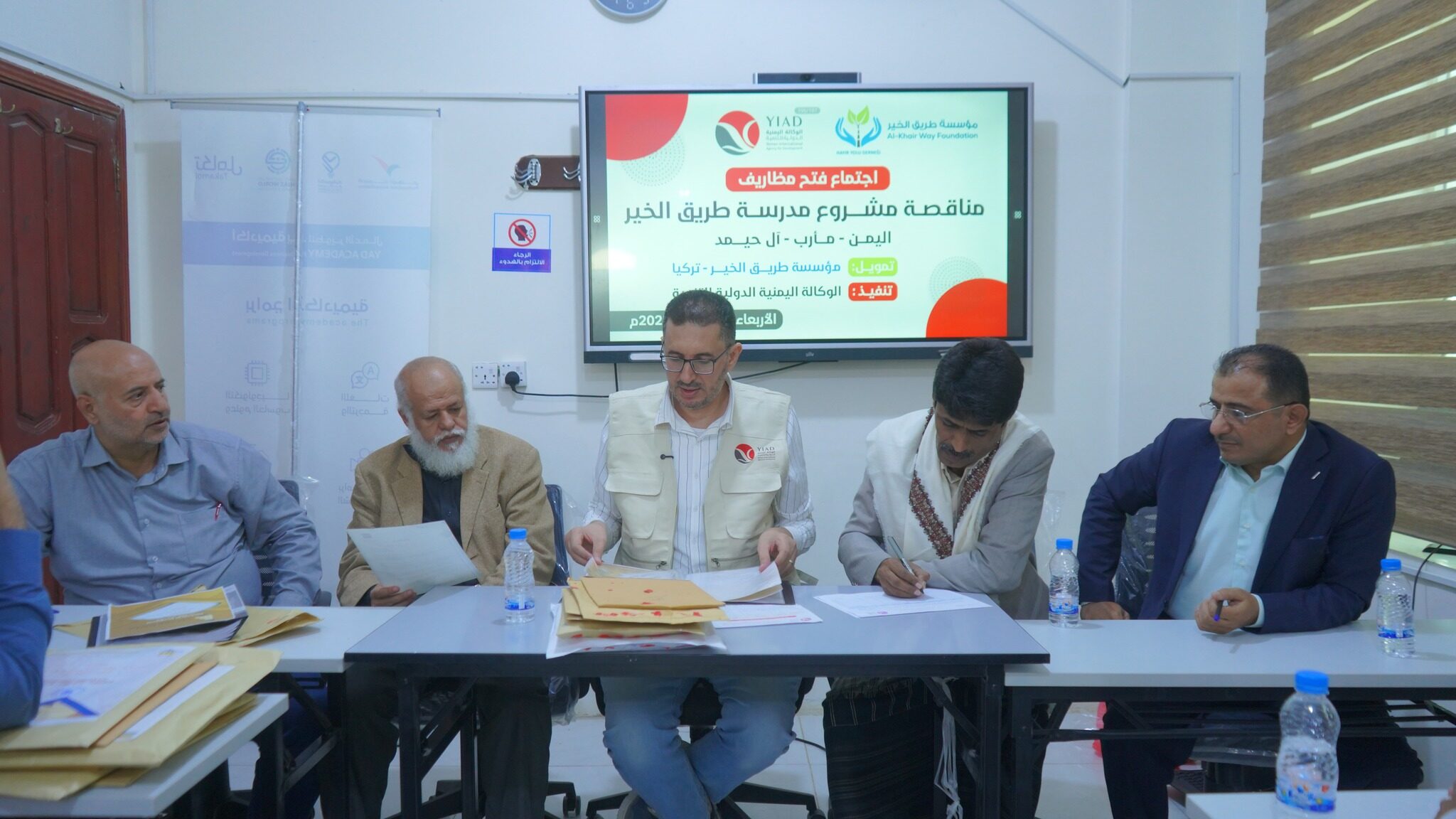
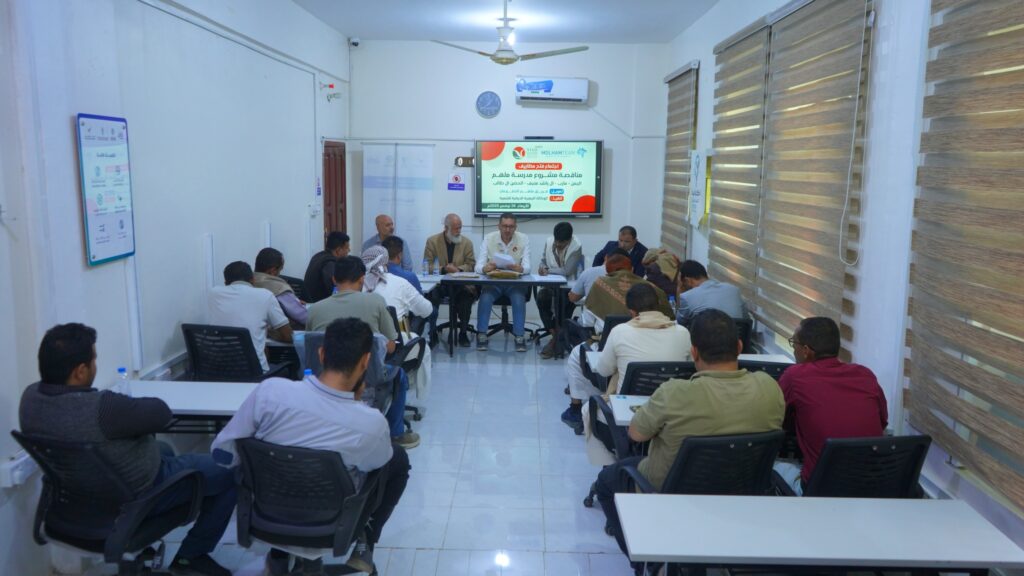
The Yemen International Agency for Development – Yemen held an official meeting at its headquarters in Marib Governorate to open the bid envelopes for the construction of Al-Tariq Al-Khair School and Mulhim Educational School. The meeting was attended by Agency representatives, members of the technical evaluation committee, and representatives of the companies that submitted bids for the two projects.
This step comes as part of the approved administrative and technical procedures for implementing educational projects, ensuring transparency and equal opportunity among competing bidders, in line with the Agency’s adopted standards for managing and implementing development projects.
During the meeting, the submitted bids were opened and the technical and financial aspects of each proposal were reviewed, in preparation for a detailed evaluation by the specialized committee. The process aims to select the implementing company based on predefined criteria to ensure the highest quality of execution.
The Yemen International Agency for Development emphasized that the Al-Tariq Al-Khair and Mulhim educational projects fall within its efforts to strengthen educational infrastructure in Marib Governorate, through the construction of modern school facilities that provide a safe and stimulating learning environment and meet the growing needs of students amid population growth and increasing pressure on existing educational institutions.
The Agency noted that these educational projects are part of its strategic vision to support the education sector as one of the key pillars of sustainable development, given its central role in human development and preparing future generations.
The Yemen International Agency for Development continues to implement a range of educational and development projects across several governorates, within well-planned strategies aimed at improving the quality of education, expanding access to learning opportunities, and contributing to a better educational future that serves the community and enhances stability.
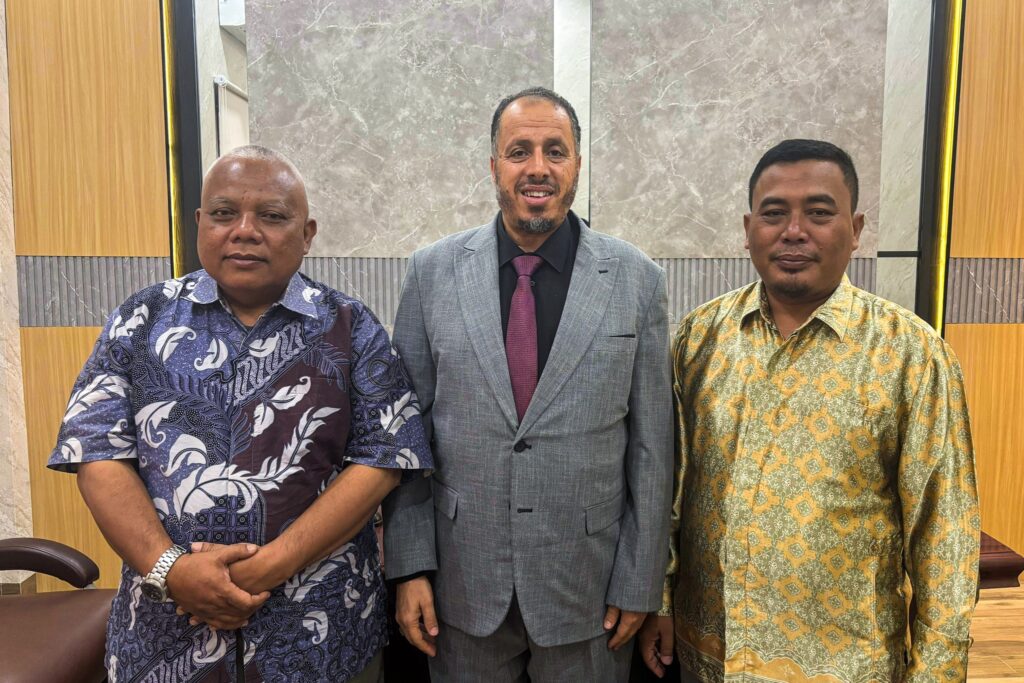
As part of its efforts to expand areas of development cooperation, Dr. Abdulraqeb Obad, President of YIAD met in the Indonesian capital Jakarta with Dr. Yusuf Salmon CEO of Global Pemberdayaan Sosial- GPS and Mr. H. Misbah Rosyadi, President of Yayasan Pendidikan Rahmany – Depok. The meetings explored opportunities for cooperation in the field of education in addition to other areas including economic empowerment, health, and sustainable development. The President of YIAD presented an overview of the key projects and programs implemented by YIAD in #Yemen. President of YIAD emphasized that coordinating efforts and advancing community development are fundamental pillars in improving the lives of the most vulnerable groups. He also stressed YIAD’s commitment to building strategic partnerships with international institutions in support of SustainableDevelopmentGoals SDGs.
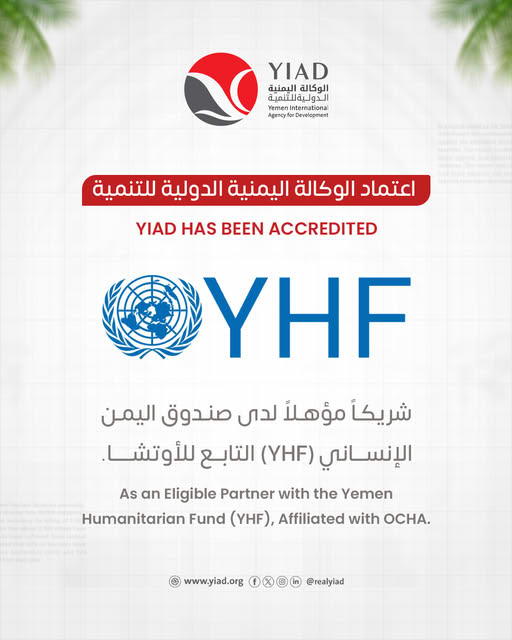
In a significant move reflecting its credibility and trust, the Yemen International Agency for Development (YIAD) has been accredited as a qualified partner with the Yemen Humanitarian Fund (YHF), solidifying its position among the leading national organizations active in the field of humanitarian work in Yemen.
This accreditation recognizes the agency’s commitment to governance and transparency standards, as well as its efficiency in managing and implementing humanitarian and development projects across Yemen.
Moreover, it represents an important milestone in enhancing YIAD’s presence and expanding its capacity to respond to the needs of the most vulnerable groups, contributing to creating a tangible and sustainable impact.
As part of the Gifted Students Support Program run by the Yemen International Agency for Development – Turkey, a number of postgraduate students participated in prestigious scientific conferences held in Istanbul, where they presented high-quality research papers in the fields of Islamic Economics and Islamic Studies.
These participations took place during the Ayasofya Postgraduate Conference, organized by Fatih Sultan Mehmet Vakıf University, and the Second Postgraduate Students Conference, organized by Istanbul Sabahattin Zaim University in cooperation with the Science Dissemination Foundation, with wide participation from postgraduate students of various nationalities.
The Gifted Students Program is implemented with generous support from the International Islamic Charitable Organization in Kuwait, and aims to empower Yemeni postgraduate students academically and scientifically, while enabling their active participation in specialized academic forums.
In the name of Allah, the Most Gracious, the Most Merciful, and peace and blessings be upon our Prophet and beloved Messenger, may Allah’s peace be upon him, his family, his companions, and those who follow his guidance.
Under the generous patronage of His Excellency Lieutenant General Sultan bin Ali Al-Aradah, Vice President of the Presidential Leadership Council and Governor of Marib Governorate, and in coordination with the Ministry of Education and the local authority in Marib Governorate, the National Education Conference was concluded, with the blessings of Allah, on May 5-6, 2025, at the 22 May Hall at the University of the Saba Region in Marib City. The conference, organized by the National Center for Strategic Studies and the Yemeni International Development Agency, was held under the theme: “National Education Conference: Reality and Challenges” and the slogan “Quality Education… The Future of Generations.” More than 120 participants took part, including researchers, academics, members of the central and local authorities from all Yemeni governorates, experts, speakers from various Arab and foreign countries, civil society organizations, the private sector, and the press and media.
The conference was launched in line with the goals of the National Center for Strategic Studies and the Yemeni International Development Agency to contribute to the development of Yemen, building human capacity, and improving opportunities for general and university education, through gathering officials, experts, researchers, and those interested in the field of education, to prepare studies and research, and coordinate and integrate efforts.
The conference aimed to explore academic and applied studies related to education, learn about modern strategies in teaching, assessment, and the challenges facing general and university education, showcase successful experiences and innovative ideas in education amidst wars and crises, stay updated with modern trends in technology and educational tools, exchange experiences, understand the current state of education and future aspirations, assess the education of students both inside and outside Yemen amidst the war, explore ways to support them, and enhance the efforts of stakeholders in the future of education, ensuring broad community participation from civil society organizations and the private sector.
During four sessions, 20 speakers from universities, central and local authorities, civil society organizations, and the private sector spoke. Over 120 participants attended and participated in discussions during Monday and Tuesday, May 5-6, 2025. The conference discussed the reality and challenges of general and university education, curriculum development, the role of the government and private sectors in education development, the risks facing the education process, and electronic learning methods and techniques.
Based on the research papers presented and the contributions made during the conference sessions, the conference concluded with the following recommendations:
Continued holding conferences, seminars, and workshops with the participation of all stakeholders in education, including investors, authorities, parents, academics, and others, for continuous development of education.
The conference recommends that the government prepares a comprehensive national education plan, which includes restructuring educational policies, aligning national legislation with international agreements on the protection of education, adopting unified national curricula that enhance human values and national identity, reconstructing infrastructure, building 3,000 damaged schools, providing safe educational facilities for students, ensuring regular payment of salaries, offering financial incentives to teachers to improve their performance, and expanding remote education programs to cover 10 million children by 2025.
The conference recommends increasing the education budget to 15% of total government expenditure to ensure the continuity of educational programs and enhancing cooperation with international organizations to secure additional funding of $500 million over the next five years.
Establish a central fund to support projects for the development of general and university education, aimed at increasing financial resources to support and fund education, with resources determined through a regulation to be studied and issued by the relevant authorities, and to benefit from the experiences of similar educational institutions in the Arab and international context in finding sources of education funding and enhancing cooperation.
Adopt the principle of diversifying funding sources and self-financing in educational institutions, granting universities the necessary financial and administrative powers to invest their resources, and promoting the concept of the productive university, while activating principles of supervision and accountability to contribute to the proper utilization, development, and preservation of resources.
Establish a virtual platform for general education under the Ministry of Education, providing all the material, human, financial, and legislative requirements, with direct supervision by the Ministry of Education, and activating electronic education management at the governorate level with qualified personnel appointed for this field.
Review the legislation regarding electronic education in Yemen to allow investment in this field, as well as academic accreditation for certificates issued by electronic platforms or educational institutions relying on electronic education.
Establish an independent national authority to protect education, responsible for monitoring and documenting violations and coordinating with international organizations to ensure the protection of educational institutions and their staff, and passing strict laws to criminalize the targeting of education.
There must be a focus on the continuous qualification and training of teachers before and during their service.
Develop a strategy to improve educational curricula and implement it by benefiting from the experiences of countries with strong global educational systems, based on the latest international rankings, and exchanging experiences by hosting experts who have effectively contributed to the development of education in their countries.
Invite businessmen to invest in education, encourage community initiatives, and commercial institutions to invest in quality private schools with an attractive educational environment, and activate supportive policies for private and community education from the government.
Develop communication and coordination between private schools, represented by the Private Education Forum, and all concerned authorities in local government and the Ministry of Education to work together to create quality private education that contributes to the development of the educational process.
Establish research centers specialized in universities, higher institutes, and official bodies such as the Ministry of Education and the Ministry of Higher Education, and provide the necessary financial support and budgets, involving the private sector in funding and conducting field and research studies related to education.
Strengthen research and cooperation between the Ministry of Education, Ministry of Higher Education, universities, research and intellectual institutions, and educational specialists.
Develop the efforts of the Ministry of Education and higher education institutions to keep pace with the digital transformation in providing educational services and benefiting from local, Arab, and global experiences.
Support for research and study centers’ efforts to analyze the reality of e-learning, the challenges it faces, and the proposal of projects and suggestions to implement digital education initiatives, keeping pace with the rapid developments in this field.
Improving the economic conditions of teachers’ families and staff members, enhancing their psychological well-being by revitalizing school feeding projects that target both students and teachers, creating an attractive learning environment, activating school activities that foster students’ love for their schools, providing suitable educational resources, and empowering social workers to assist students in solving their educational problems and addressing family-related issues.
Activating guidance and psychological support programs in schools, universities, and specialized institutes.
Working to enhance values related to the development of educational leadership performance and educational services.
Focusing on appropriate educational alternatives for the reality of education in Yemen, including educational channels, radio-based education, blended learning, mobile schools, online learning, home education, and e-learning applications.
Opening an independent and transparent international investigation into the grave violations that education in Yemen is subjected to, holding those responsible criminally accountable before international courts, including education violations in periodic international reports on Yemen, and considering these violations a humanitarian priority in emergency response programs and reconstruction plans.
The conference calls on the United Nations and the international community to apply effective pressure to achieve a permanent ceasefire and secure educational institutions from military targeting.
Strengthening partnership and cooperation between donor organizations and the government, and enhancing cooperation with Yemen’s partners from friendly and brotherly countries to improve education in its various aspects.
Promoting community partnerships in a realistic way, focusing on women’s empowerment in decision-making positions to strengthen their active role in society, and adopting educational programs and awareness centers that focus on the female sector.
Establishing a department in the Education offices in governorates to manage educational and community crises during conflicts, crises, and peace.
Equipping schools with modern technologies, training teachers and administrative staff to use them, and improving the effectiveness of measurement and evaluation in education in Yemen.
Developing curricula to keep up with research and knowledge developments, and including Information and Communication Technology (ICT) as part of the curricula.
Finally, the participants extend their thanks, appreciation, and gratitude to His Excellency, Lieutenant General Sultan bin Ali Al-Arada, Vice President of the Presidential Leadership Council and Governor of Marib Governorate, for honoring the conference with his esteemed sponsorship and his significant efforts during this critical phase our country is going through.
The participants highly appreciate the efforts of the National Center for Strategic Studies and the Yemen International Development Agency for organizing the conference activities, as well as all the committees that contributed effectively to achieving its objectives.
The participants express their sincere gratitude to the administration of the University of Seba Region for hosting the conference and supporting and contributing to its success.
We renew our deep gratitude and immense thanks to everyone who contributed, supported, and worked diligently to ensure the success of the conference.
We ask Almighty Allah for success and assistance.
Issued by the National Conference on Education: Reality and Challenges Marib City, May 6, 2025